Moneyfarm Review: 0.70% on £20k, Falling Above £50k
Moneyfarm review: 0.45% management plus 0.25% platform fee on the first £50k, cheaper bands above. What £10k to £500k costs and who it suits.
This Moneyfarm review starts with how the bill is now built, because it changed in July 2025 and many older reviews still quote the old bands. Moneyfarm now charges two things on its managed portfolios: a management fee of 0.45% on the first £50,000, falling in bands above that, and a separate platform fee of 0.25% on everything. On a £20,000 ISA that is 0.70%, or £140 a year, before the cost of the funds themselves.
The bands are progressive, so you only pay each rate on the slice of money inside that band, and nothing at all in management fees above £1.5 million. Every figure below comes from Moneyfarm’s own pricing and help pages, checked on 20 November 2026.
Moneyfarm fees at a glance
| Actively managed | Fixed Allocation | Smart Yield | |
|---|---|---|---|
| Management fee, first £50,000 | 0.45% | 0.15% | 0.05% |
| Management fee, £50,000 to £100,000 | 0.20% | 0.15% | 0.05% |
| Management fee, £100,000 to £1.5 million | 0.10% | 0.15% | 0.05% |
| Management fee, above £1.5 million | None | 0.15% | 0.05% |
| Platform fee | 0.25% (minimum £1.25 a month) | 0.25% | 0.25% |
| Fund costs (average) | about 0.16% | about 0.16% | varies |
| Market spread | up to 0.05% | up to 0.05% | varies |
| Entry, exit, withdrawal, top-up fees | None | None | None |
The platform fee is worked out on all your Moneyfarm managed money added together, across the ISA, Junior ISA, pension and general account. Its £1.25 a month floor (£15 a year) only bites on pots under £6,000, where 0.25% would come to less.
Fund costs and spread are not billed to you. They come out of the funds’ prices, so you see them in your returns rather than as a charge, but they are a real cost. Moneyfarm’s own calculator puts the total on £20,000 actively managed at up to 0.91%, or about £182 a year.
What Moneyfarm costs in pounds
Management fee plus platform fee, before fund costs and spread:
| Pot size | Actively managed | Fixed Allocation |
|---|---|---|
| £10,000 | £70 (0.70%) | £40 (0.40%) |
| £20,000 | £140 (0.70%) | £80 (0.40%) |
| £50,000 | £350 (0.70%) | £200 (0.40%) |
| £100,000 | £575 (0.58%) | £400 (0.40%) |
| £250,000 | £1,100 (0.44%) | £1,000 (0.40%) |
| £500,000 | £1,975 (0.40%) | £2,000 (0.40%) |
On £100,000 actively managed you pay 0.45% on the first £50,000 (£225), 0.20% on the next £50,000 (£100) and 0.25% platform fee on the lot (£250). The bands are why the percentage falls as the pot grows, and why actively managed and Fixed Allocation cost almost the same by £500,000.
Moneyfarm against Nutmeg and InvestEngine
The robo-advisers we have reviewed, on the same management-and-platform basis:
| £ a year | £20,000 | £50,000 | £100,000 |
|---|---|---|---|
| Moneyfarm actively managed | £140 | £350 | £575 |
| Moneyfarm Fixed Allocation | £80 | £200 | £400 |
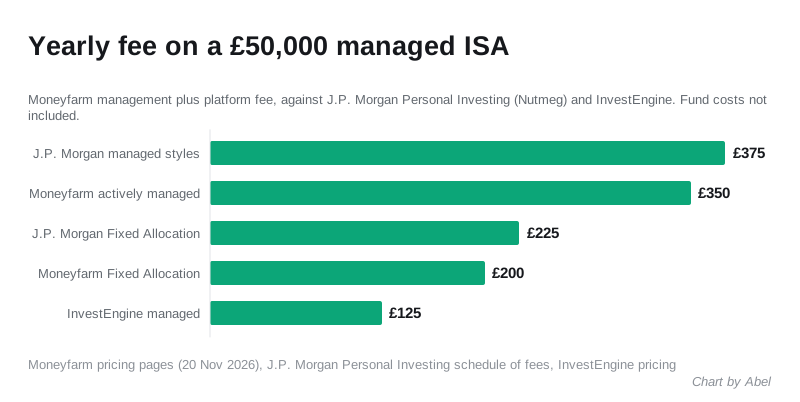
| J.P. Morgan Personal Investing (Nutmeg) managed styles | £150 | £375 | £750 |
| J.P. Morgan Fixed Allocation | £90 | £225 | £450 |
| InvestEngine managed | £50 | £125 | £250 |
Three things stand out:
- Moneyfarm is slightly cheaper than Nutmeg’s successor at every size, and the gap widens above £50,000. On £100,000 actively managed it costs £175 a year less than J.P. Morgan’s managed styles.
- InvestEngine is far cheaper than both, at a flat 0.25%. You give up the human support tiers and the wider product range, which is what Moneyfarm is charging for.
- Fixed Allocation is the better buy below about £250,000 if you are happy with a portfolio that is rebalanced back to set weights rather than actively shifted. Above that, the active bands catch up.
To run your own numbers against other platforms, use our investment platform fee calculator.
What you get: portfolios and service tiers
Moneyfarm builds its portfolios mainly from ETFs, with some mutual funds, across shares, bonds and commodities. You answer a questionnaire, and it matches you to a risk level. Its ESG portfolios run from 2% to 14% target volatility. The options:
- Actively managed: the investment team shifts the mix through the year as markets move. The default.
- Fixed Allocation: a set mix, rebalanced but not actively changed. Cheaper.
- ESG: socially responsible versions of the portfolios.
- Thematic Investing: a core portfolio with growth themes (such as climate change or artificial intelligence) added on top.
- Smart Yield: a low-risk money market portfolio tracking the Bank of England rate, for short-term cash.
How much human help you get depends on how much you hold. Moneyfarm splits clients into three tiers: Core (£500 to £10,000, automated advice and a UK support team), Premium (£10,000 to £100,000, access to its investment consultants) and Private (above £100,000, your own qualified wealth manager and one free Guidance+ session a year). That access to a named person is the main thing Moneyfarm offers that cheaper ETF apps do not.
Accounts on offer
- Stocks and Shares ISA: £500 minimum, the £20,000 yearly allowance. It is a flexible ISA: Moneyfarm says you can withdraw and pay back in the same tax year without using fresh allowance. ISA transfers in are accepted.
- Junior ISA: £500 to open, or a Direct Debit from £10 a month, up to £9,000 a year. The child can take the money from 18. Compare it with others in our best Junior ISA apps.
- Pension (SIPP): new pensions start in a Guided Solution that lowers the risk with age; you can switch to your own risk level or ESG. Tax relief is added, and you can take 25% tax free from 55 (57 from April 2028). Moneyfarm will also help find and combine old pensions. See our best SIPP apps.
- General investment account, a Cash ISA, and a separate DIY service (below).
There is no Lifetime ISA; Moneyfarm’s help pages say so plainly. For one, see our best Lifetime ISA apps.
Moneyfarm Share Investing (DIY)
Alongside the managed portfolios, Moneyfarm runs a do-it-yourself service with over 1,000 shares, ETFs and funds. It is priced completely differently:
| Share Investing | |
|---|---|
| Account opening | Free |
| Share, ETF or fund trade | £3.95 flat |
| Bond trade | £5.95 flat |
| Currency conversion | 0.70% |
| ISA custody fee | 0.35% a year, capped at £45 |
The £45 cap makes the DIY ISA cheap to hold for a large ETF portfolio, but 0.70% FX on every overseas trade is high. Buying £1,000 of a US share costs £3.95 plus £7 FX. If you mostly buy US shares, look at our best investment apps instead.
Catches worth knowing
Transfers out go as cash. Moneyfarm cannot transfer your investments in specie, so if you move to another provider everything is sold within 7 days and sent as cash. Moneyfarm charges nothing for this, but you are out of the market for the days the transfer takes.
Withdrawals take up to seven working days. Selling can take up to three working days and the payment to your bank up to three more. Not the place for money you might need tomorrow.
The Direct Debit minimum is £100 a month on adult accounts, according to Moneyfarm’s help pages, against £10 for the Junior ISA. Smaller regular savers may be better off with a cheaper app.
Fees are hard to see on the pricing page. The headline calculator shows one figure at a time. The band table on the “Our Service” page is the one to read.
Is Moneyfarm safe?
Moneyfarm is authorised and regulated by the Financial Conduct Authority, firm reference 629539, which you can check on the FCA register. Client investments are held separately from the company’s own money, and eligible investments are covered by the Financial Services Compensation Scheme up to £85,000 if the firm fails, though not against falls in the market. Our guide to whether your money is safe in an investing app explains the difference.
Who Moneyfarm suits
- Hands-off investors with £10,000 to £100,000 who want someone to talk to. The Premium tier’s consultants come at a fee a little below Nutmeg’s successor.
- Larger pots, above £100,000, where the bands bring the actively managed cost down and a named wealth manager is included.
- People who want an ISA, Junior ISA and pension in one app with the same portfolio approach.
It suits less well:
- Cost-first investors. InvestEngine’s managed portfolios cost about a third as much, and a DIY global tracker fund cheaper still.
- Small regular savers, because of the £100 adult Direct Debit minimum.
- First-time buyers saving for a home, because there is no Lifetime ISA.
Check the current bands on Moneyfarm’s Our Service page before you open an account, as fees can change.
Frequently asked questions
How much does Moneyfarm charge? On actively managed portfolios, a management fee of 0.45% on the first £50,000, 0.20% from £50,000 to £100,000, 0.10% from £100,000 to £1.5 million and nothing above, plus a 0.25% platform fee on everything. Fund costs of about 0.16% and spread of up to 0.05% come on top.
Is Moneyfarm cheaper than Nutmeg? Slightly. On £20,000 Moneyfarm actively managed costs £140 a year against £150 at J.P. Morgan Personal Investing (formerly Nutmeg), and on £100,000 it is £575 against £750. Both are much dearer than InvestEngine’s managed portfolios.
What is the minimum investment at Moneyfarm? £500 for the ISA, Junior ISA, pension and general account. A Direct Debit needs at least £100 a month on adult accounts, or £10 a month for the Junior ISA.
Is the Moneyfarm ISA flexible? Yes. Moneyfarm says you can withdraw from your Stocks and Shares ISA and replace the money in the same tax year without it counting against your allowance again.
Does Moneyfarm offer a Lifetime ISA? No. It offers a Stocks and Shares ISA, Junior ISA, Cash ISA, pension and general account, but not a Lifetime ISA.
Can I transfer my Moneyfarm investments to another provider? Yes, free of charge, but only as cash. Moneyfarm sells your holdings within 7 days of the transfer request and sends the proceeds, because it cannot transfer investments in specie.